



25-, 30-, 40-, 50- & 60-Year Electrical Recertifications in South Florida: A Complete Step-by-Step Guide with Electryfy
If your property in Miami-Dade, Broward, or Palm Beach County is approaching a milestone age, you may be required to complete a 25-, 30-, 40-, 50-, or 60-Year Building Electrical Recertification. These mandatory inspections verify that your building’s electrical systems remain safe, reliable, and compliant with current codes.
For property managers, HOA boards, condominium associations, and commercial building owners, the process can feel overwhelming. This guide explains the entire electrical recertification process from start to finish, what to expect, and how to prepare your property for successful approval.
What Is an Electrical Recertification?
Electrical recertification is a city-mandated safety evaluation of a building’s electrical systems after a certain number of years in service. The goal is to prevent hazards such as:
- Electrical fires
- System failures
- Shock risks
- Outdated or recalled equipment
- Code violations
- Overloaded or deteriorated infrastructure
South Florida municipalities require recertification because of harsh environmental conditions, including humidity, salt air, storms, and heavy electrical loads.
Who Needs Electrical Recertification?
Typical properties required to complete electrical recertification include:
- Condominium and HOA buildings
- Commercial properties
- Industrial facilities
- Hotels and hospitality properties
- Multi-family residential buildings
- Older institutional buildings
Step-by-Step Electrical Recertification Process
1) Comprehensive Building Electrical Inspection
The process begins with a thorough on-site inspection performed by licensed electrical professionals and engineers.
Key items evaluated include:
- Main electrical service equipment
- Meter banks and disconnects
- Electrical panels and breakers
- Wiring methods and conductor condition
- Grounding and bonding systems
- Lighting systems and emergency lighting
- Smoke detectors and life-safety components
- GFCI/AFCI protection where required
- Corrosion or water intrusion damage
- Code compliance issues
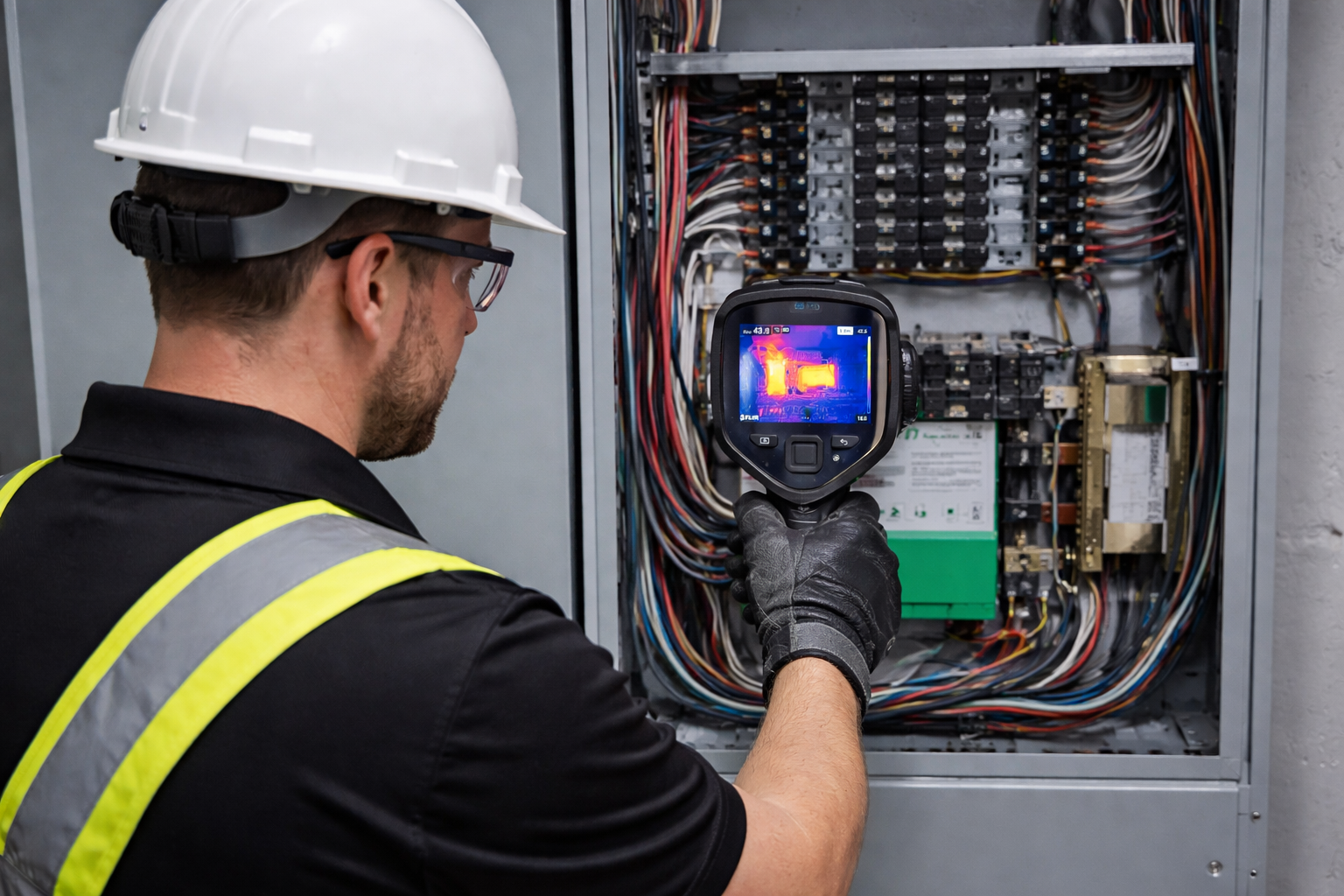
Thermographic (infrared) scanning is often performed to detect overheating connections that are invisible to the naked eye.
2) Detailed Findings Report
After the inspection, you receive a comprehensive report documenting:
- Out-of-code conditions
- Safety hazards
- Failed or deteriorated components
- Thermographic anomalies
- Recommended corrective actions
- Priority levels for repairs
This report becomes the roadmap for bringing the property into compliance.
3) Engineering Plans & Compliance Design
If deficiencies are identified, engineered plans are often required for permitting and repairs.
Engineering may include:
- Electrical load calculations
- Riser diagrams
- Panel schedules
- Site lighting plans
- Grounding and bonding upgrades
- Service equipment replacement design
- Photometric lighting compliance (if required)
In South Florida, plans typically must be signed and sealed by a licensed professional engineer.
4) RFQ (Request for Quotation) for Contractors
Many property owners issue an RFQ or bid package based on the engineering documents. This allows multiple licensed contractors to provide competitive proposals for the corrective work.
A strong RFQ should include:
- Engineering drawings
- Scope of work
- Site conditions
- Project timeline requirements
- Access limitations
- Insurance requirements
5) Detailed Electrical Proposal & Budget
Contractors provide a comprehensive estimate covering:
- Engineering coordination
- Permit processing
- Labor and installation
- Materials and equipment
- Lighting upgrades
- Smoke detectors and GFCIs
- Panel replacements
- Wiring corrections
- Grounding and bonding improvements
- Safety upgrades
Transparent pricing is critical for budgeting large recertification projects.
6) Engineering Finalization & Permit Submission
Once a contractor is selected:
- Engineering plans are finalized
- Permit applications are submitted
- City plan review begins
- Comments are addressed until approval
Permit timelines vary by municipality and project complexity.
7) Material Procurement & Notice of Commencement (NOC)
After permits are approved:
- Long-lead materials are ordered
- Equipment logistics are scheduled
- A Notice of Commencement is filed (if required)
- Work schedules are coordinated with property management
8) Installation & Code Corrections
Corrective work may include:
- Panel replacements
- Breaker upgrades
- Rewiring or conductor replacement
- Grounding improvements
- Lighting repairs or upgrades
- Safety device installations
- Replacement of recalled equipment (e.g., FPE, Zinsco)
- Meter bank repairs
- Service equipment upgrades
Daily reports and communication help ensure transparency throughout the project.
9) City Inspections & Compliance Verification
The city performs inspections at key stages, typically including:
- Rough inspection (if applicable)
- Final inspection
- Additional specialty inspections if required
Any deficiencies must be corrected before approval.
10) Final Documentation for Recertification Submission
Upon successful completion:
- Approved permit records are compiled
- Inspection approvals are documented
- Engineering certifications are issued (if required)
- Compliance packages are delivered to the client
These documents are submitted to the city to obtain official recertification approval.
Important: Other Trades May Be Required
Electrical recertification is often part of a broader building recertification process that may also involve:
- Structural inspections
- Fire safety upgrades
- Plumbing corrections
- Elevator compliance
- Life-safety systems
Coordination across trades is essential for full approval.
Warranty & Long-Term Reliability
Most reputable contractors provide:
- Workmanship warranties (typically 1 year)
- Manufacturer warranties on equipment
- Ongoing maintenance options
Investing in quality materials and installation reduces future compliance risks.
Why Early Planning Matters
Recertification deadlines are strict. Delays can lead to:
- Fines and penalties
- Insurance complications
- Certificate of occupancy issues
- Liability exposure
- Emergency repair costs
Starting early allows time for budgeting, engineering, and scheduling.
Need Help with Electrical Recertification in South Florida?
A qualified electrical contractor with engineering capabilities can guide your project from inspection to final approval—reducing risk, delays, and cost overruns.
If your building is approaching a recertification milestone, now is the time to plan.


