
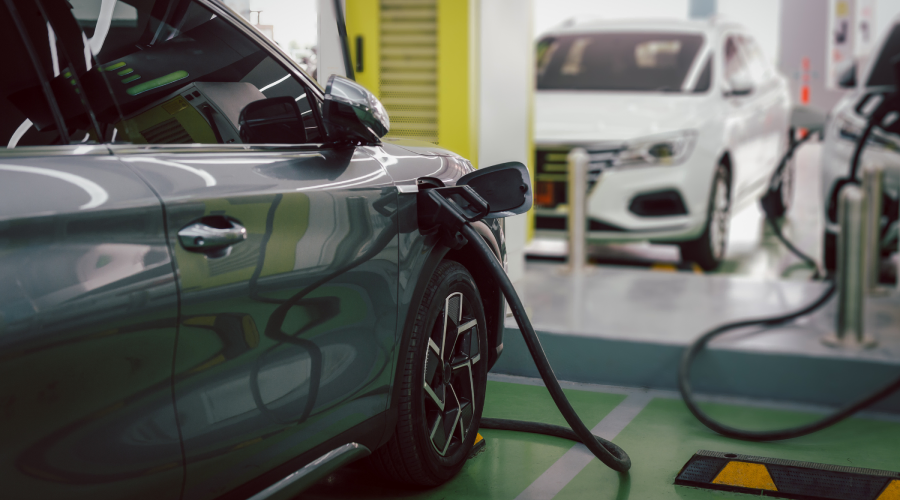

Installing EV charging at a commercial property or condominium starts with the electrical system and the people who will use it. Electryfy provides EV charger installation services in Broward, Miami-Dade and Palm Beach counties. This guide explains the choices to discuss before purchasing equipment.
Which charging type fits the property?
Level 1 charging uses a 120-volt supply and provides relatively slow charging. Level 2 charging commonly uses 208- or 240-volt AC power and is often considered for workplaces, multifamily properties and other locations with longer parking times. DC fast charging serves different use cases and can require substantially more electrical capacity and utility coordination.
Charging speed depends on the vehicle, charger, power available, battery state of charge and temperature. Do not base a project on a universal time-to-80% promise. Confirm connector compatibility and the equipment manufacturer’s requirements for the vehicles you expect to serve.
What should the installation scope include?
A qualified electrical contractor should evaluate available capacity, protection, grounding and bonding, equipment ratings and installation conditions. Confirm permitting and any engineering or utility requirements before work begins. Existing outlets or spare breaker spaces alone do not establish that the system can support additional charging loads.
What should the owner decide?
Choose whether access is reserved for residents, employees or the public. Identify the operator and any charging-network provider, and verify payment features, connectivity, support arrangements and ongoing fees in the actual proposal. Installation services do not by themselves establish access to a public charging network or a particular mobile app.
Decisions to make before selecting chargers
Start with who will use the chargers, typical parking duration and the number of vehicles expected to charge at once. Then evaluate electrical capacity, charger locations, conduit routes, accessibility and expansion needs. A faster charger is not automatically the best fit for a property where vehicles remain parked for hours.
- Assign responsibility for electricity costs, payment processing, network fees and maintenance.
- Confirm who owns the equipment and who responds when a charger is unavailable.
- Ask which costs are included in the proposal: engineering, permits, trenching, restoration and utility work.
- Verify any incentive’s current eligibility and funding before including it in the budget.
Useful EV charging resources
DOE’s multifamily charging resources address shared-property considerations. Explore Electryfy’s commercial EV installation services and the Wynmoor Theater project for local context.


